
Webbing Sling Safety Inspection Guide | Lifting Slings Safety Inspection Guide
June 30, 2026
Webbing slings are an important lifting tool that is widely used in the construction field, logistics, harbor, warehouse, manufacturing and mining as well as heavy industry. Although polyester webbing slings are designed for high strength lifting operations, Regular inspections remain very important to ensure safety and prevent work accidents.
A damaged lifting sling can cause load damage, equipment damage, worker injuries and large operational time losses. Therefore, Every lifting sling must be checked before use and during routine maintenance schedules.
In this guide we explain how to properly carry out a sling webbing inspection, What signs of damage do you need to pay attention to?, and when to stop using lifting slings.
Why Webbing Sling Inspection is So Important
Lifting slings work under heavy tension during the lifting process. With long use, exposure to friction, sharp edges, sinar UV, chemicals and moisture can weaken the sling material.
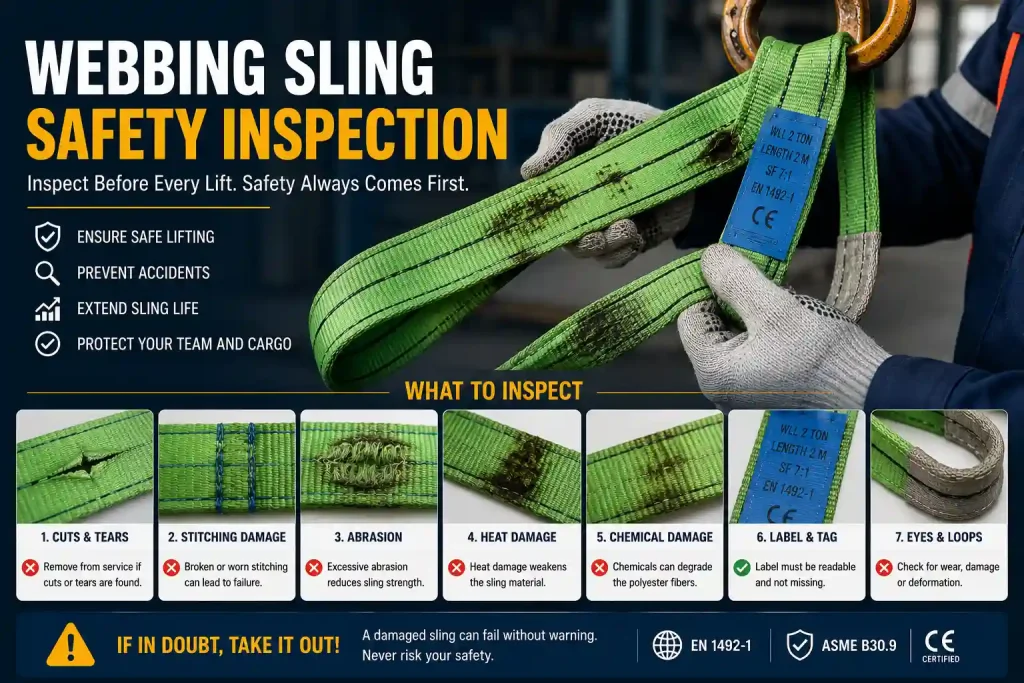
Routine inspection of webbing slings is beneficial for:
- Prevent lifting accidents
- Improve workplace safety
- Extends sling life
- Reduce equipment damage
- Ensure compliance with lifting safety standards
Regular sling inspection is one of the most crucial safety procedures in goods handling and rigging operations.
When Should Webbing Slings Be Inspected
Webbing slings must be checked in the following conditions:
- Before each removal operation
- After heavy lifting or abnormal lifting
- During scheduled routine maintenance inspections
- After exposure to chemicals or extreme temperatures
- After long term storage
Professional lifting operations generally carry out scheduled inspection procedures to maintain lifting safety standards.
1. Check Cuts, Tearing and Abrasion Damage
The first step of a sling webbing inspection is to check the sling surface for visible physical damage.
Check the following section:
- Cuts in polyester webbing
- Tear at edge of sling
- Surface abrasion
- Fiber loss
- Broken thread
Even small cuts can lower the Working Load Limit (WLL) sling significantly.
If severe abrasions or tears are found, The sling should be removed from use immediately.
2. Sling Seam Inspection
The seam area is the most critical part of the lifting sling.
Check carefully:
- Stitch breaks
- Loose thread
- Pull connection
- Damaged reinforcement area
Damaged stitching can cause the sling to break during the lifting process.
High quality webbing slings use reinforcing stitching to increase strength and durability.
3. Check for Heat and Chemical Damage
Exposure to heat or chemicals can weaken the sling material and reduce lifting performance.
Signs of Heat Damage
- Melt fiber
- Burnt container
- Hard or brittle webbing
- Discoloration
Signs of Chemical Damage
- Material softens
- Fiber separation
- Unnatural color change
- Chemical stains
Polyester lifting sling should not be exposed to strong acids, high temperatures or corrosive chemicals unless specifically designed for that environment.
4. Inspection of Sling Eyes and Reinforcement Rings
For eye type & eye webbing sling, Check the lifting eye area carefully.
Check the following:
- Wear in the sling eye area
- Damaged protective sleeve
- Shape change
- Excessive abrasion
The sling eye section withstands concentrated pressure during lifting and must always be in good condition.
Using corner protectors can reduce wear and extend the life of the sling.
5. Verify Sling Labels and Identity Tags
Every certified lifting sling must have a clear and easy to read safety label.
Labels generally contain information:
- Working Load Limit (WLL)
- Sling length
- Safety factor
- Material type
- Standards met
- Manufacturer information
Commonly used international standards:
- IN 1492-1
- ASME B30.9
- CE Certification
If the label is missing or illegible, Slings are prohibited from use.
6. Check for UV and Environmental Damage
Sun exposure, humidity and long-term outdoor use can weaken the polyester sling material.
Sign of environmental damage:
- Color fades
- Brittle fibers
- Surface cracks
- Decreased flexibility
Proper storage can significantly extend the life of a lifting sling.
The correct way to store slings:
- Store in a dry place
- Stay away from direct sunlight
- Stay away from chemicals
- Avoid sharp objects
7. Stop Using Damaged Slings Immediately
Never try to repair damaged webbing slings unless it is done by a professional according to the manufacturer's instructions.
Lifting slings must be stopped immediately if the following conditions are found:
- There are cuts or tears
- Stitch breaks
- There is heat damage
- There is chemical damage
- Safety label missing
- S undergoes severe deformation
Replacing damaged lifting equipment is always safer and more cost-effective than risking sling failure during lifting.
Best Practices for Safe Use of Webbing Slings
To increase safety and extend sling life:
- Always use a sling with the appropriate capacity
- Avoid overloading slings
- Protect slings from sharp edges
- Follow the correct lifting angle
- Perform regular inspections
- Use certified lifting equipment
- Train operators in safe lifting procedures
Safe lifting operations depend on proper equipment selection and a regular inspection schedule.
Conclusion
Safety inspection of webbing slings is an important part of safe lifting operations. Regular inspections help detect cuts, abrasion, chemical damage, broken stitches and other defects before they cause serious accidents.
Good for use in construction, logistics, factory, mining and ports, Polyester lifting slings must be checked before use and maintained according to international standards.
Using quality webbing slings and carrying out correct inspection procedures can increase work safety, reduces downtime and protects workers and valuable cargo.