
How to Choose the Right Webbing Sling for Lifting | Complete Security Guide
June 30, 2026
Selecting the appropriate Webbing Sling is one of the most important steps to ensure safe and efficient lifting operations. Whether you work in construction, logistics, manufacturing, harbor, mining, and heavy industry, Selecting the correct lifting sling can improve workplace safety, protect the load, and increase operational efficiency.
Polyester webbing slings are widely used because they are light, flexible, long lasting, and suitable for a variety of lifting applications. However, there are still many users who choose lifting slings based only on price without considering load capacity, lifting method, material sling, and security standards.
In this guide we explain how to choose the right webbing sling and what factors you need to pay attention to before buying a lifting sling.
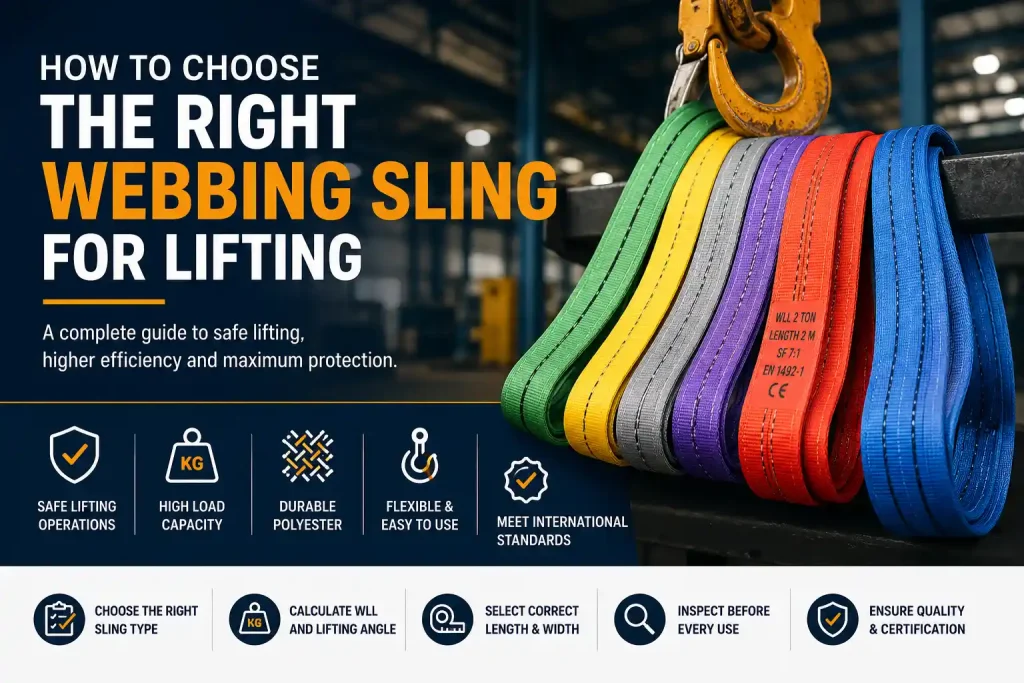
What is Webbing Sling?
Webbing Sling is a flexible lifting rope made from high strength polyester webbing. Usually used in conjunction with a crane, chain hoist, lifting hook, and other goods handling equipment.
Compared to steel wire slings or chain slings, Polyester webbing slings have several advantages:
- Light and easy to operate
- Protects delicate cargo surfaces
- High flexibility
- Even load distribution
- Resistant to moisture and UV rays
- Less risk of cargo damage
Thanks to these advantages, webbing lifting slings are widely used for lifting goods, machine handling, warehouse operations, transportation, and industrial applications.
1. Determine the weight of the load before choosing a lifting sling
The first step in choosing the right webbing sling is knowing the weight of the load.
Always choose a sling with a Working Load Limit (WLL) which exceeds the actual load weight. Using a lifting sling that is too small can cause the sling to break, damage to goods, even serious work accidents.
Typical Capacity of Webbing Slings
- 1 Ton Webbing Sling
- 2 Ton Webbing Sling
- 3 Ton Webbing Sling
- 5 Ton Webbing Sling
- 10 Ton Webbing Sling
Sling labels must clearly display the following information:
- WLL (Working Load Limit)
- Safety Factor
- Sling Length
- Material
- Standards met
Never exceed the lifting capacity stated on the sling.
2. Select the appropriate type of webbing sling
Each lifting application requires a different sling configuration.
Flat Webbing Sling
Suitable for general lifting, provides good load stability. Widely used in warehouses, factory, and construction projects.
Endless Webbing Sling
Very versatile, can be used for the vertical method, basket, and choker lifting. Longer service life as wear points can shift during use.
Eye and Eye Webbing Sling
Equipped with reinforced lifting eyes for easy attachment to hook and shackle. This is one of the most common types of lifting slings in the industry.
Round Sling
Ideal for delicate loads, shiny, or irregularly shaped because it distributes pressure evenly and reduces surface scratches.
Selecting the right sling type increases work safety and efficiency.
3. Select Width & Appropriate Sling Length
The width and length of polyester webbing slings have a direct effect on lifting performance.
Why Sling Width Is Important
- Spreads the load more evenly
- Reduces sharp pressure points
- Protects delicate cargo surfaces
- Increases stability when lifting
Reasons Why Sling Length Is Important
The exact length of the sling depends on:
- Payload size
- Lift height
- Crane configuration
- Lifting angle
- Hitch type
Using slings that are too short or too long can create dangerous lifting conditions. Long custom service available for special applications.
4. Understand the Different Lifting Methods
The fastening method will affect the actual capacity of the sling.
Common Sling Hitch Types
Vertical Lift
The load is lifted directly by one leg of the sling.
Choker Hitch
The sling securely wraps around the load for secure attachment, However, this method can reduce the WLL value of the sling.
Basket Hitch
Basket type lifts balance the load better and often have a greater lifting capacity than vertical lifts.
The operator must follow the sling load table and recommended safety procedures.
5. Check Sling Material & Work environment
Most lifting webbing slings are made from high strength polyester because of their superior lifting performance.
Advantages of Polyester Webbing Sling Material
- High tensile strength
- Low elongation
- Lightweight design
- UV resistant
- Moisture resistant
- Resists some chemicals
However, environmental conditions also need to be considered.
Avoid using slings in the following conditions:
- High temperature environment
- Areas exposed to chemicals
- Unshielded sharp-edged charges
- The workplace is full of abrasive friction
The use of corner protectors and protective sleeves can extend the life of the sling.
6. International Security Standard Verification
High quality Webbing Slings are required to meet international standards and test requirements.
General Standards for Webbing Slings
- IN 1492-1
- ASME B30.9
- CE Certification
- ISO Quality Standards
Trusted sling manufacturers usually complete:
- Test certificate
- Quality inspection report
- Material tracking
- Breaking strength test
Certified lifting equipment increases safety and buyer confidence.
7. Perform Inspection Before Each Use
Regular inspections are very important to prevent lifting accidents.
Before each lifting operation, Check the sling for the following damage:
- Cuts or tears
- Stitch breaks
- Damage due to friction (abrasion)
- Heat damage
- Chemical corrosion
- Shape change
- Safety label missing
Damaged slings are prohibited from being used at all.
Regular inspection and proper storage can extend service life and increase work safety.
8. Trusted Webbing Sling Manufacturer
Working with a professional lifting sling manufacturer guarantees product quality, security, and stable supply.
Trusted suppliers are required to provide:
- High quality polyester webbing sling
- Strict quality control
- Load test equipment
- OEM and custom solutions
- International certification
- Fast delivery & technical support
Professional manufacturers can also recommend the type of lifting sling that best suits your application needs.
Conclusion
Choosing the right Webbing Sling for lifting isn't just about price or appearance. Load weight factor, tipe sling, lifting method, material sling, work environment, and international standards all play an important role in safe lifting operations.
Quality polyester webbing slings can reduce the risk of work accidents, improve lifting efficiency, and protect valuable cargo during transportation and handling of goods.
If you need a reliable lifting sling, endless webbing sling, flat webbing sling, eye & eye sling, or custom lifting solutions, it's best to work with a professional lifting equipment manufacturer for guaranteed long-term safety and performance.